


Walser Pistenraupen Modellbau
The model of a Ratrac 265W was developed jointly by three Swiss model building friends (Adrian Humbel, Sebastian Frautschi, Melvin Müller) and presented to the public for the first time at Faszination Modellbau 2018, with 3 models at once. I was able to get one of the rare kits of this historical model, and since my colleagues never published building pictures, I would like to give you a little insight into building the model.
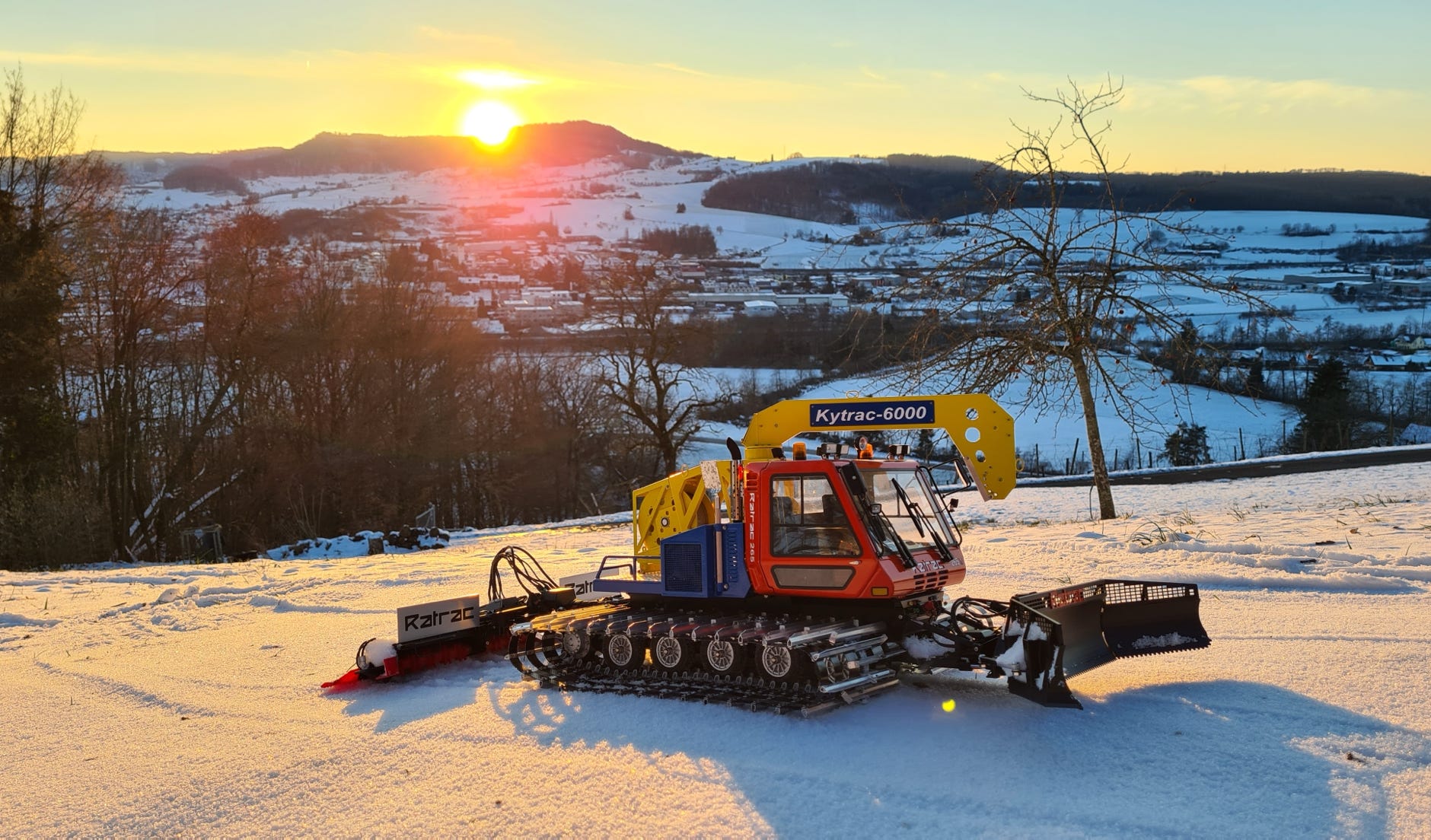
Ratrac 265 W by Adrian Humbel (Photo: Adrian Humbel)
Ratrac was one of the leading manufacturers from the 1960s to the 1980s and for a long time was synonymous at least in Europe with the name of a snow groomer, regardless of the manufacturer. I have put together more about the mutual history of these traditional snow groomers here.
The Ratrac 265 was first introduced in the USA in 1992 as the LMC 3700 CF, in Europe it was sold as the Ratrac 265. This snow groomer was technically ahead of its time, but it was also plagued by a few problems. It was one of the last Ratrac snow groomers, only the 400 followed with the same cab but different technology. The original for our model was built in 1996 and was still in use in 2018 at the Ganzsteinschanze in Mürzzuschlag in Austria, where it was photographed and measured by the Swiss model builders.
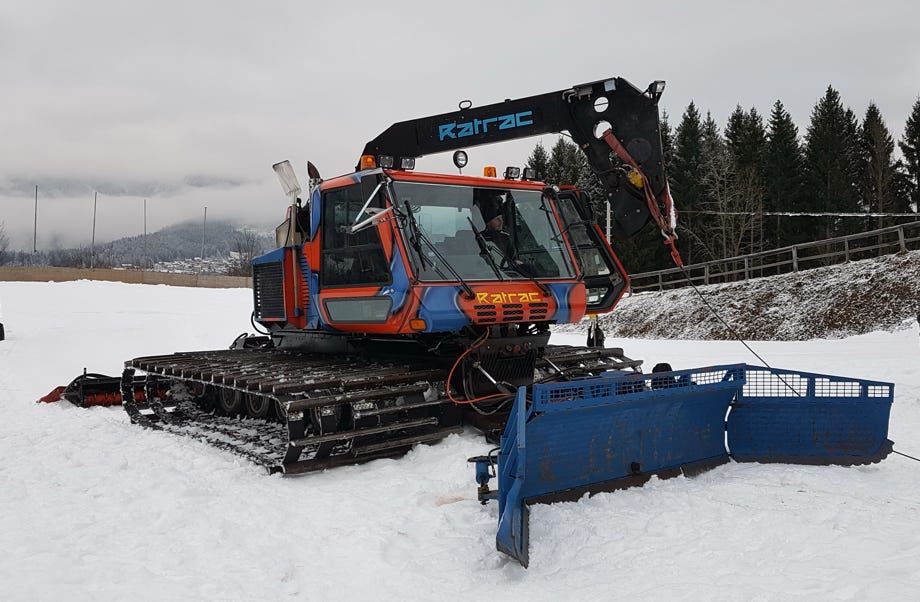
Original Ratrac 265 W in Mürzzuschlag, Austria (Photo: Adrian Humbel)
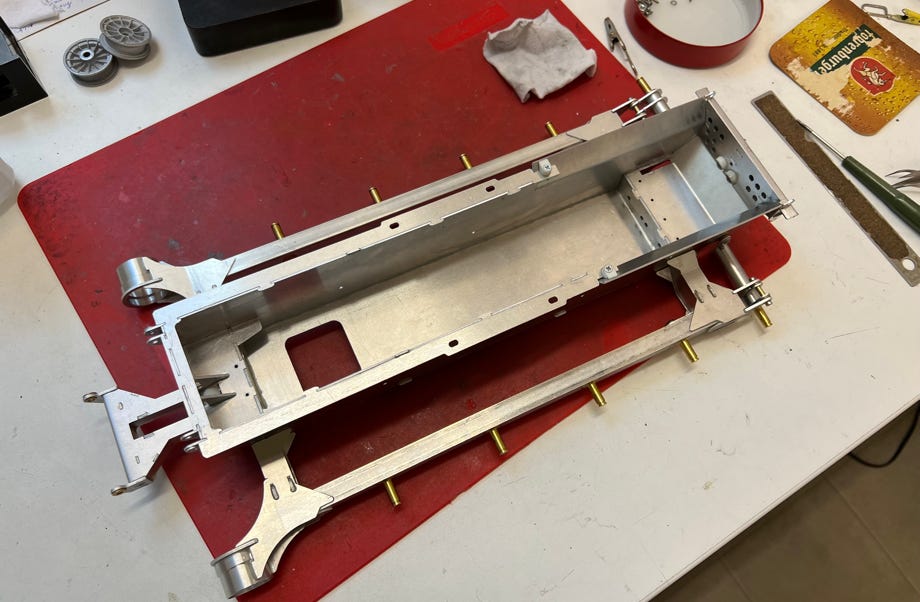
The chassis is a solid construction made of sheet metal parts, which I glued together in the oven with UHU plus endfest 300.
The fixed boom at the rear for the rear implement carrier is interesting.
Proven components from Pistenking were used for the swingarms, as well as for the chain tensioning, which is designed separately for each chain. This will certainly bring advantages when driving. The drive itself is via Pistenking flex shafts with noble Maxon geared motors, which I also use in the PB100 and PB400. Unfortunately, if you need the space, you can't get around these expensive parts.
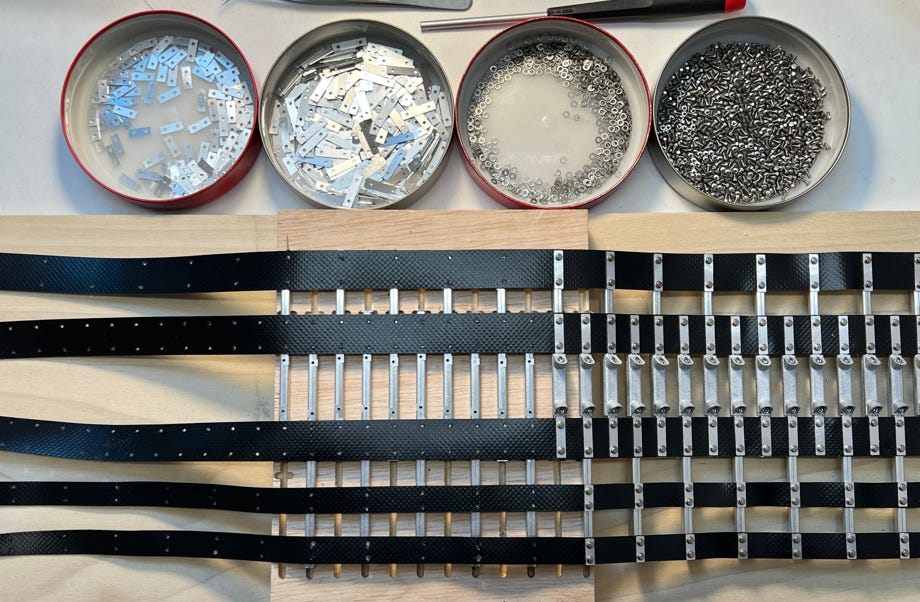
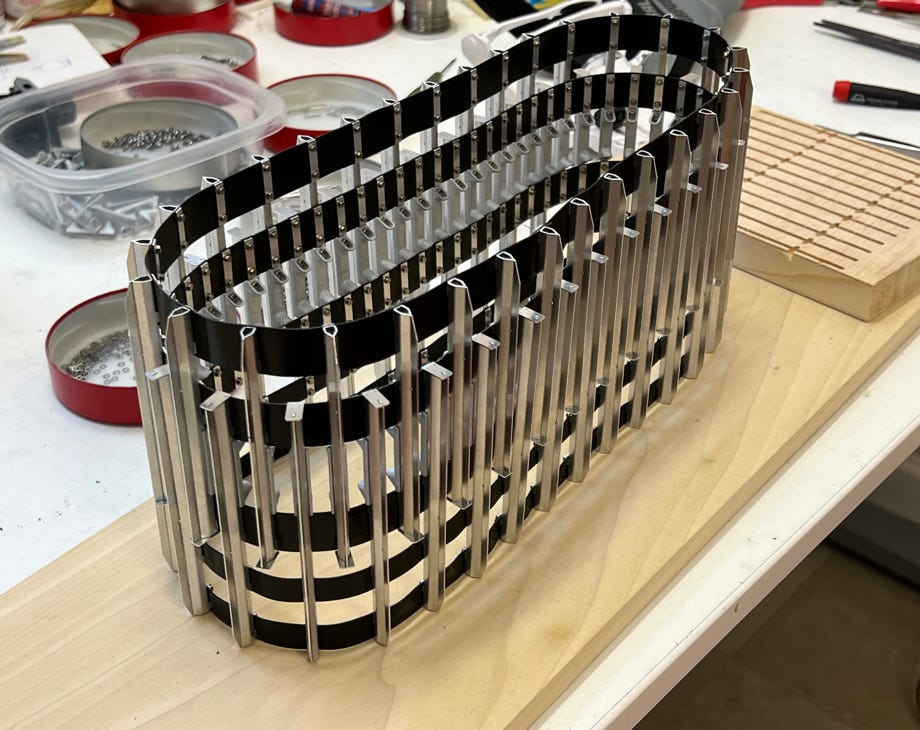
The tracks are a feast for the eyes and correspond optically exactly to the original. Each bar is glued together from 2 precisely folded sheet metal parts and an end piece. They are screwed on with tiny M1.6 stainless steel hexagonal screws + washer, and of course true to the original with 2 screws per counter plate. The track brackets are printed parts that I previously painted silver. In total there were 1116 screws for both chains. These are the most complex and beautiful tracks I have assembled so far.
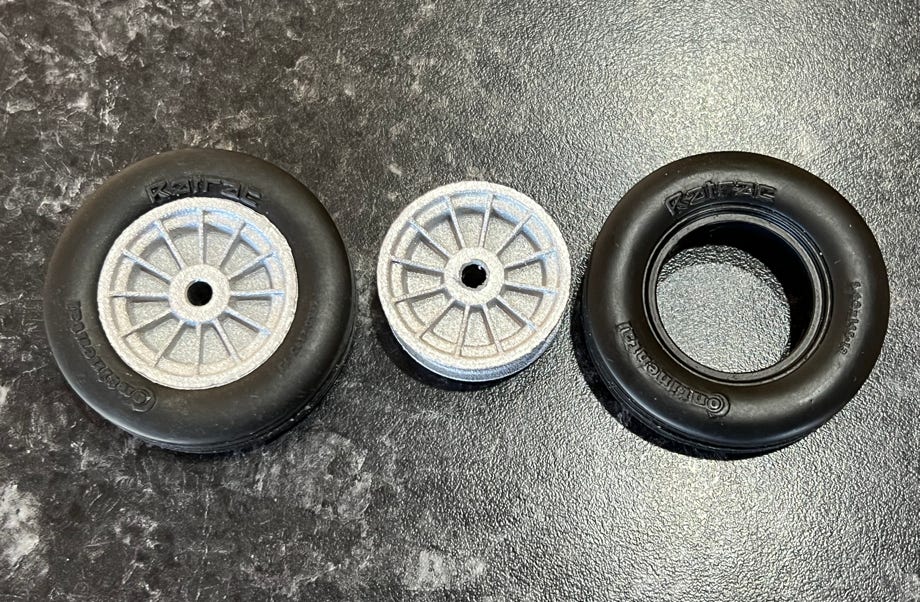
I chose a different design for the tires, you can usually see the LMC logo on the original tires. Melvin sent me a photo of Continental tires with the Ratrac logo. I modeled it in CAD and then had Modellbau Fuchs cast them out of rubber.
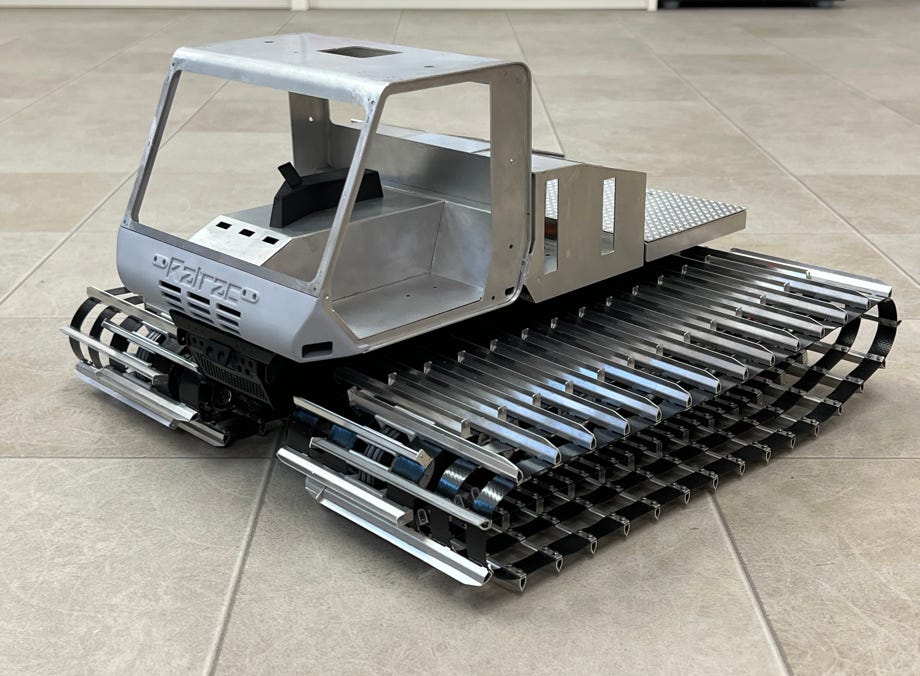
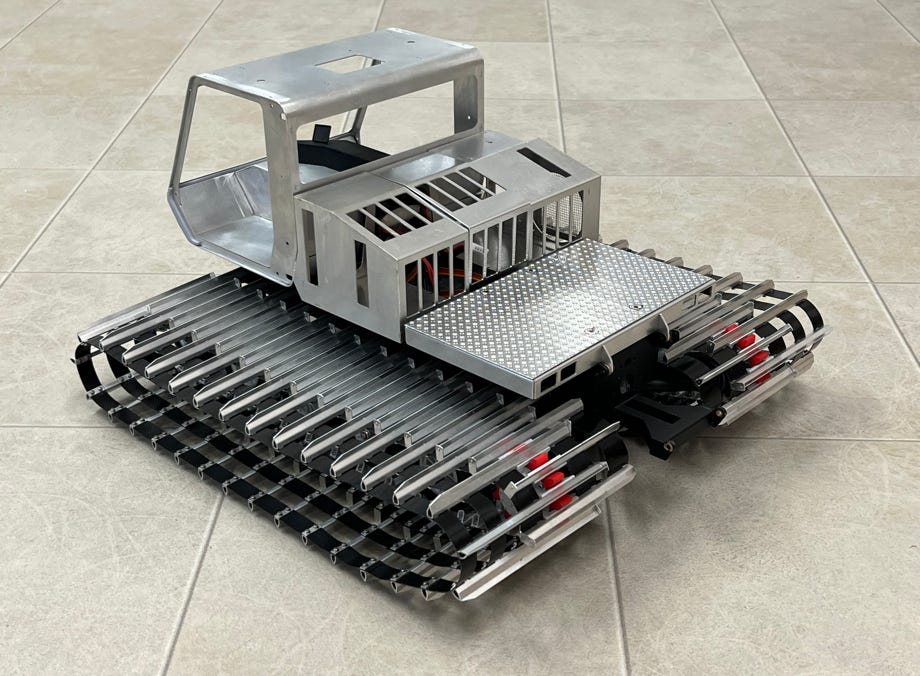
The body is sturdily constructed from aluminum sheet and was perfectly bent by Adrian. It fits onto the side panels without any gaps. The front bumper and B-pillars are printed nylon parts.
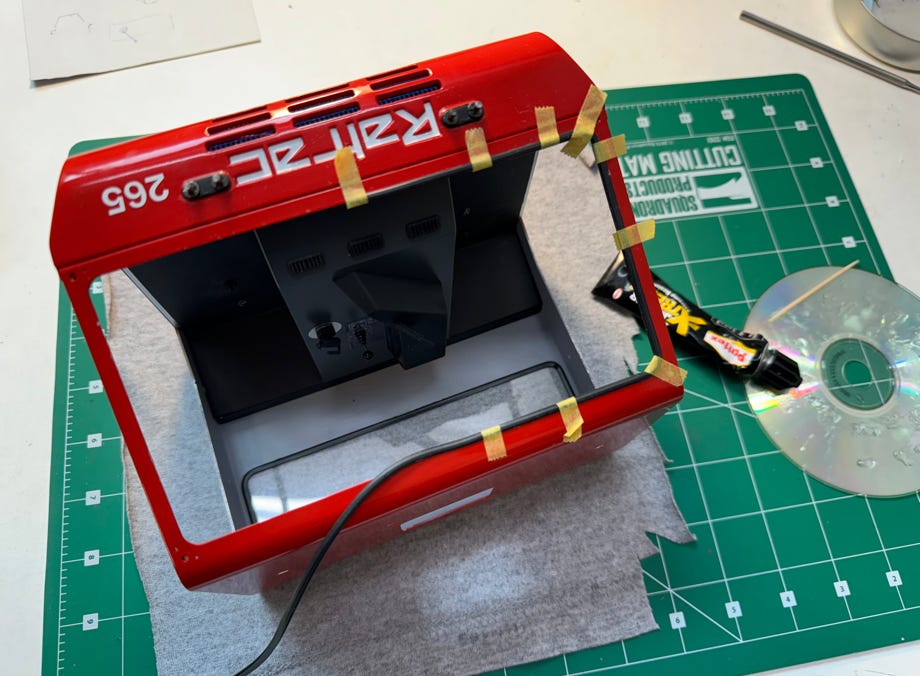
For the front and rear windows, I purchased special, true-to-scale rubber profiles from Fechtner Modellbau. However, installing them with the windows was quite fiddly. It only worked after first gluing them to the body with Pattex.
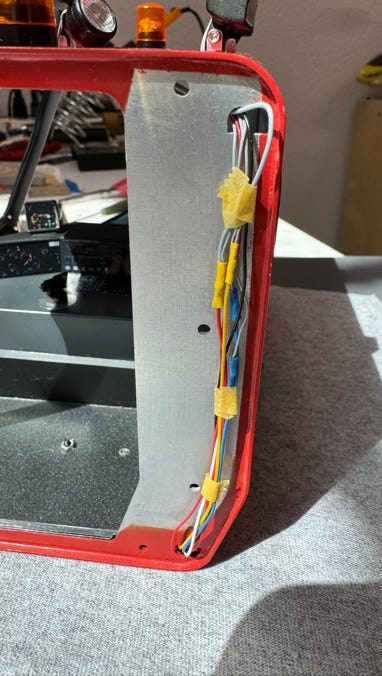
I was able to neatly stow the wiring harness in the B-pillar.
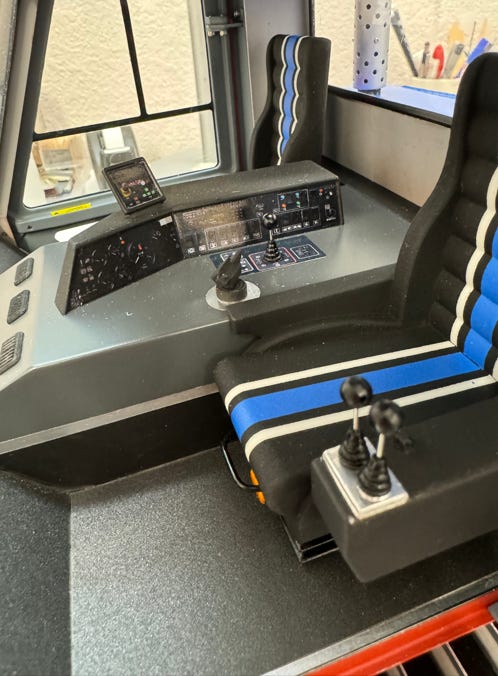
I painted the seats just like the original Ratrac. I had waterslide decals printed for the dashboards; that was my contribution to this kit.
The lighting functions are controlled by Pistenking Kingbus.
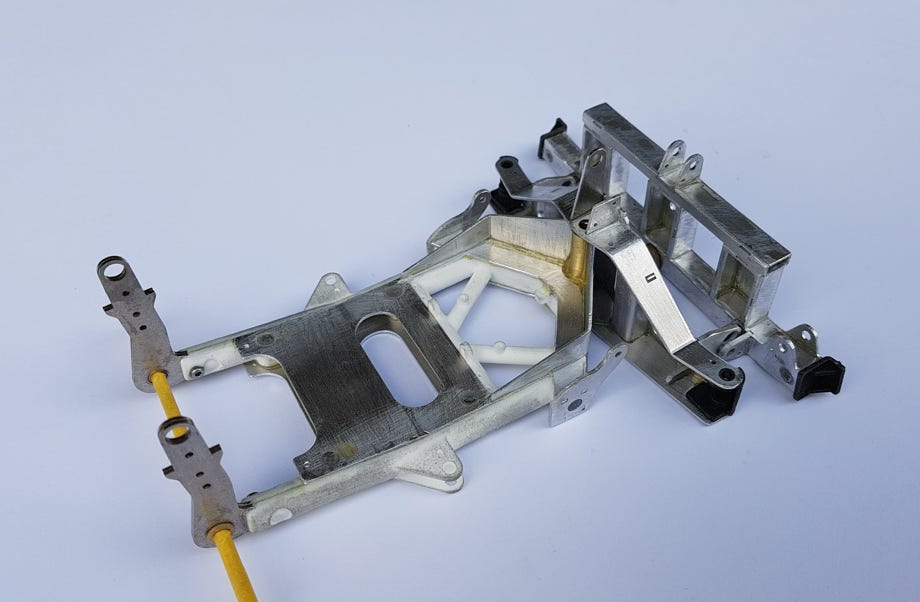
The front attachment carrier is a very interesting design. For whatever reason, Ratrac didn't use the now ubiquitous ball joint, but instead implemented each joint for the four functions separately:
- Lifting joint on the chassis tub
- Swivel joint around the vertical axis on the push frame
- Blade angle joint with an intermediate frame
- Tilting joint on the blade
The snow blade is made up of several segments and can be glued together precisely using slotted and tenon joints without any major problems.
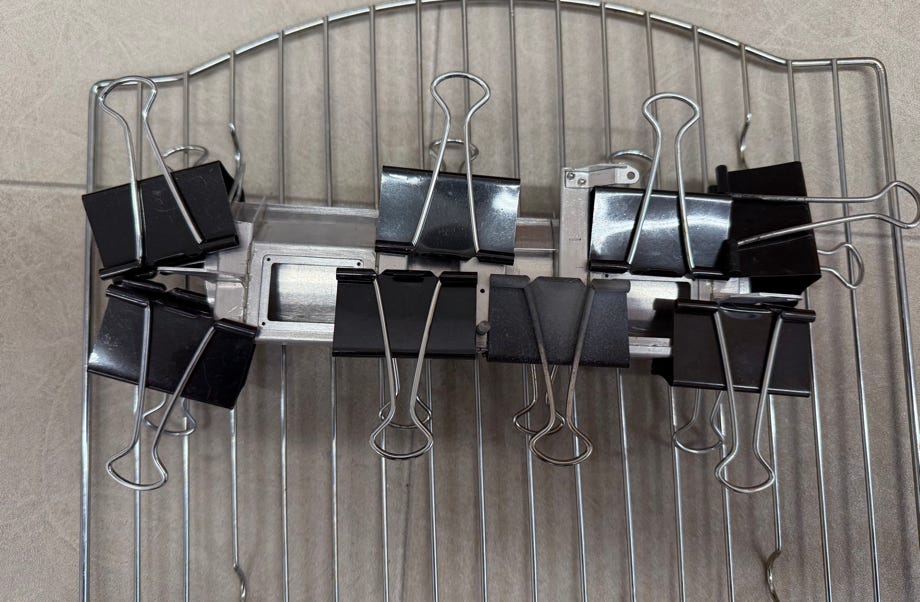
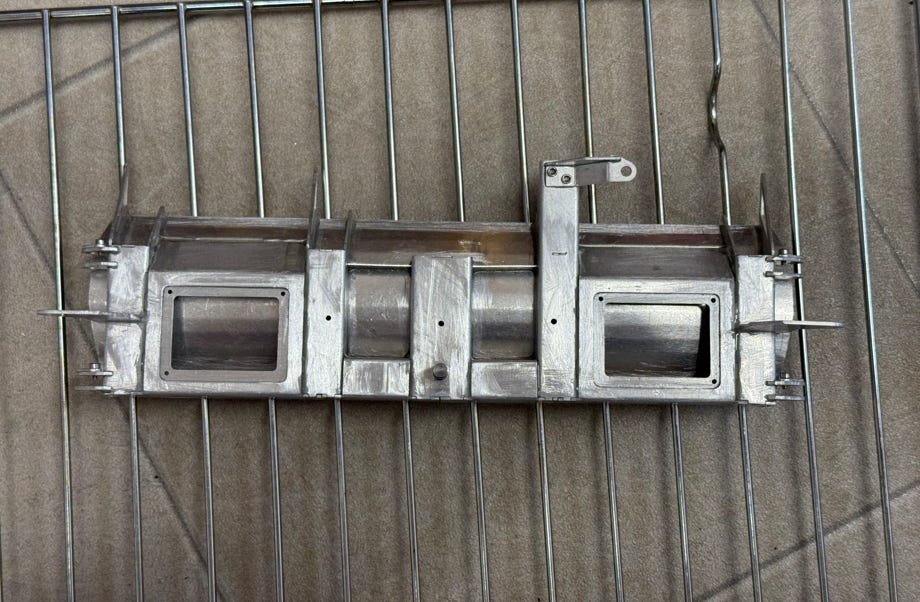
The shield movements of raising, swiveling, and blade angle are performed mechanically.
The tilting function and the adjustment of the side panels are not yet implemented.
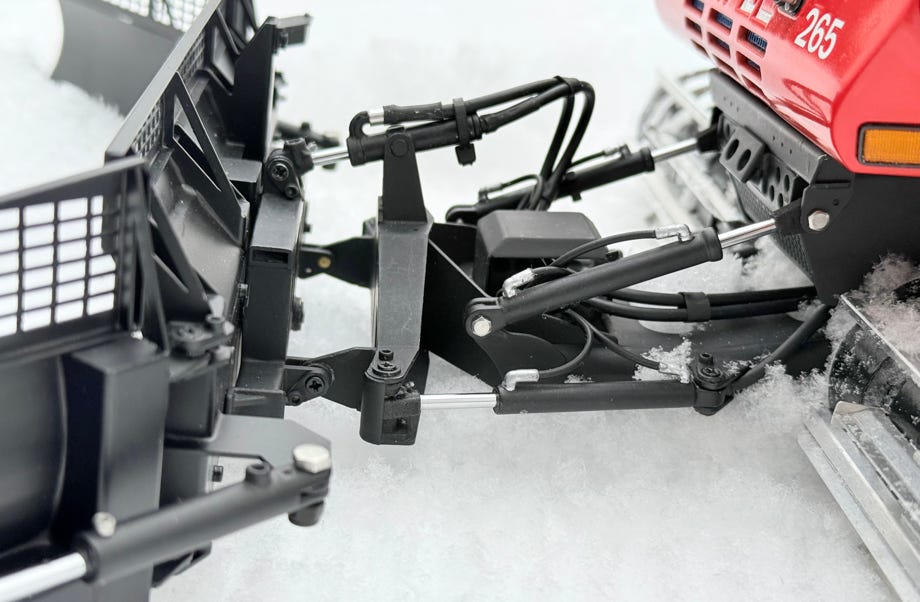
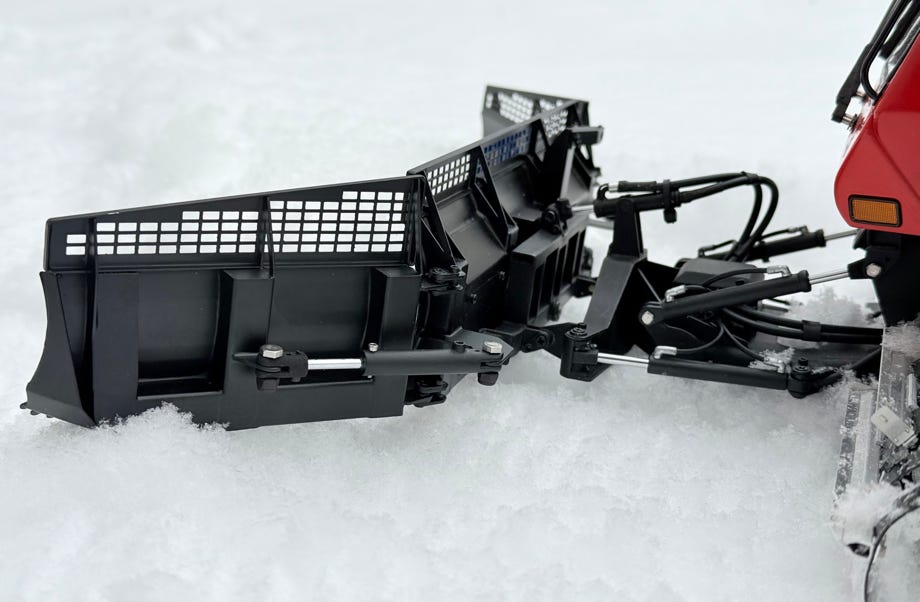
Unfortunately, this project was repeatedly interrupted because Kässbohrer released the new PB400 and shortly thereafter the PB800, and these were immediately modeled, as reported elsewhere on this webpage.
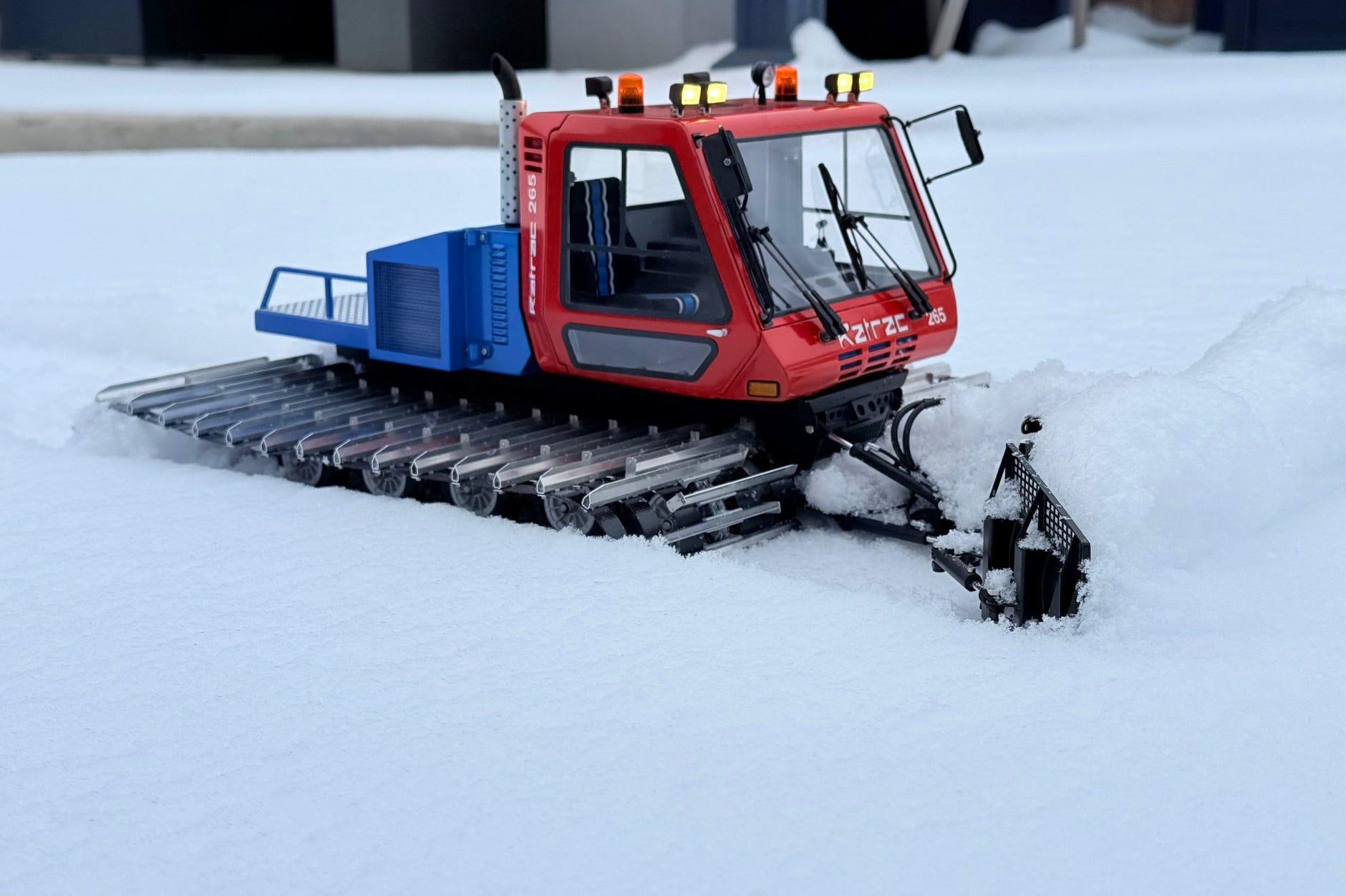
On January 7, 2025, the time had finally come: a little fresh snow fell, and I was able to test the Ratrac in the snow for the first time, albeit without the rear-mounted tiller.
The rear attachment carrier and the rear-mounted tiller are also very interesting designs; they look significantly different from what you'd expect from modern PistenBullys.
The attachment carrier is also considerably longer, which means the tiller is positioned further away from the vehicle. The lifting cylinder operates on tension and is therefore robustly constructed. This makes things easier for the model builder: the lifting cable remains inside the tub and is thus invisible.
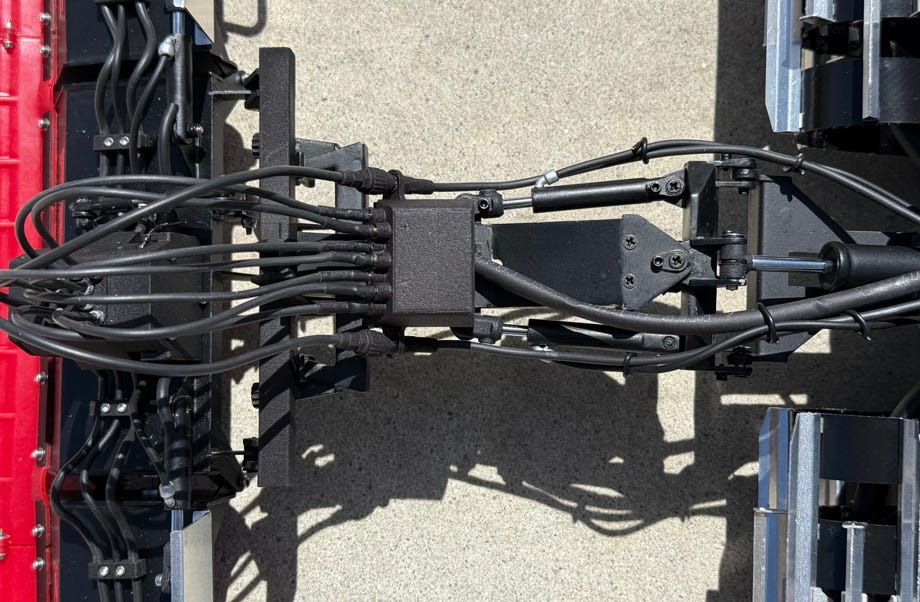
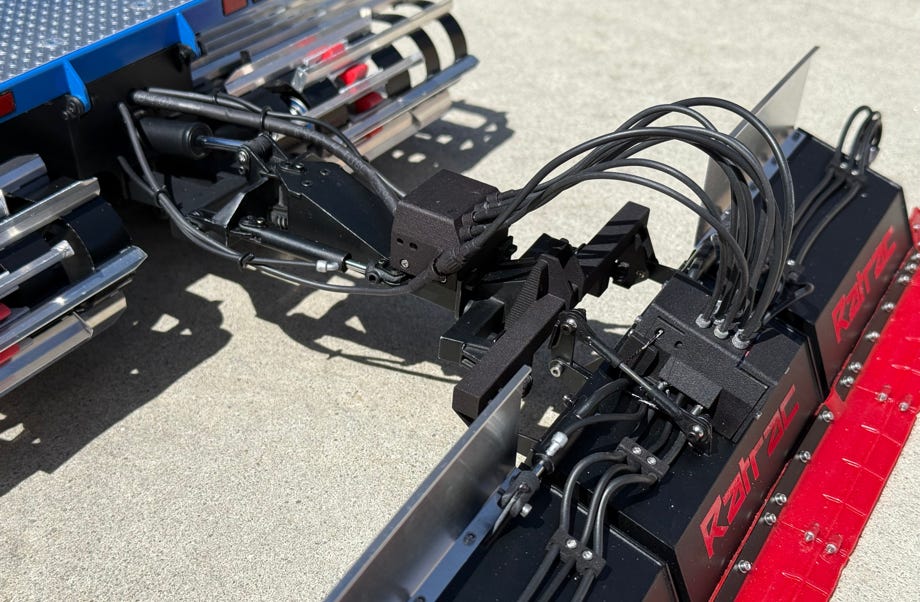
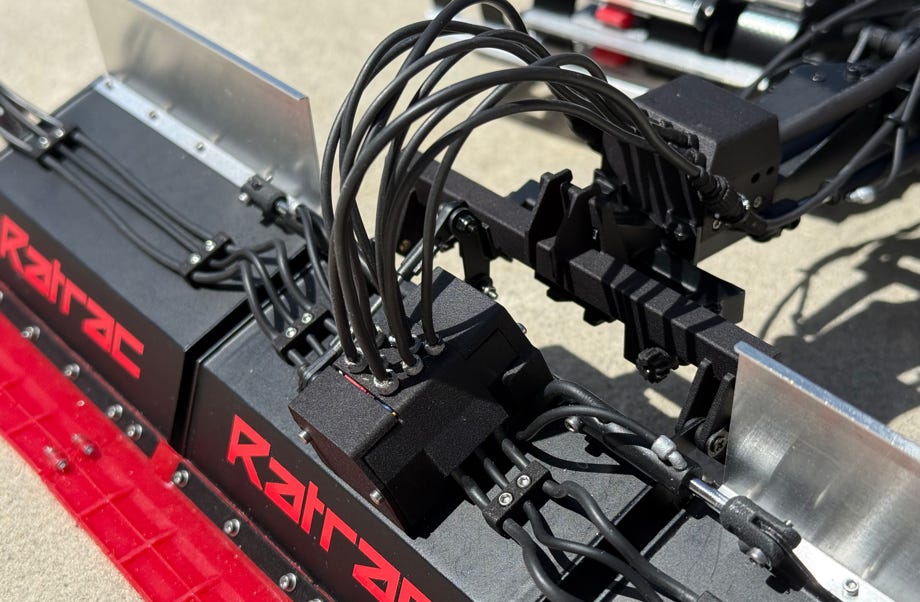
The tiller consists of three individual tiller boxes, which in the original can be pressed down using hydraulic cylinders. The tiller shafts are driven by two internal Maxon geared motors; the middle tiller shaft is connected via flexible shafts. On the model, each of the outer tiller boxes can be raised.
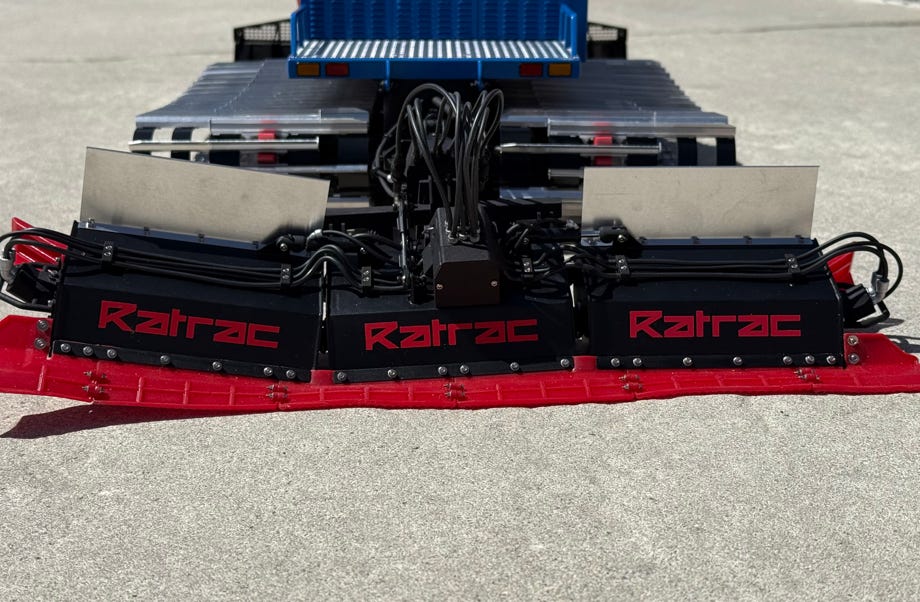
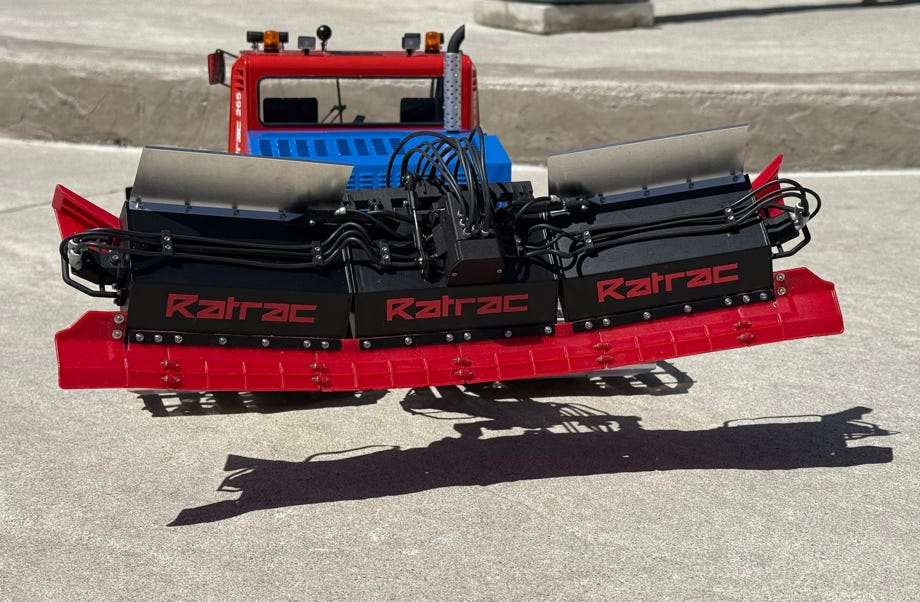
We get some snowfall here in April, but it's usually too warm for an outing. However, it was enough for photos of the (almost) finished snow cat in the snow:
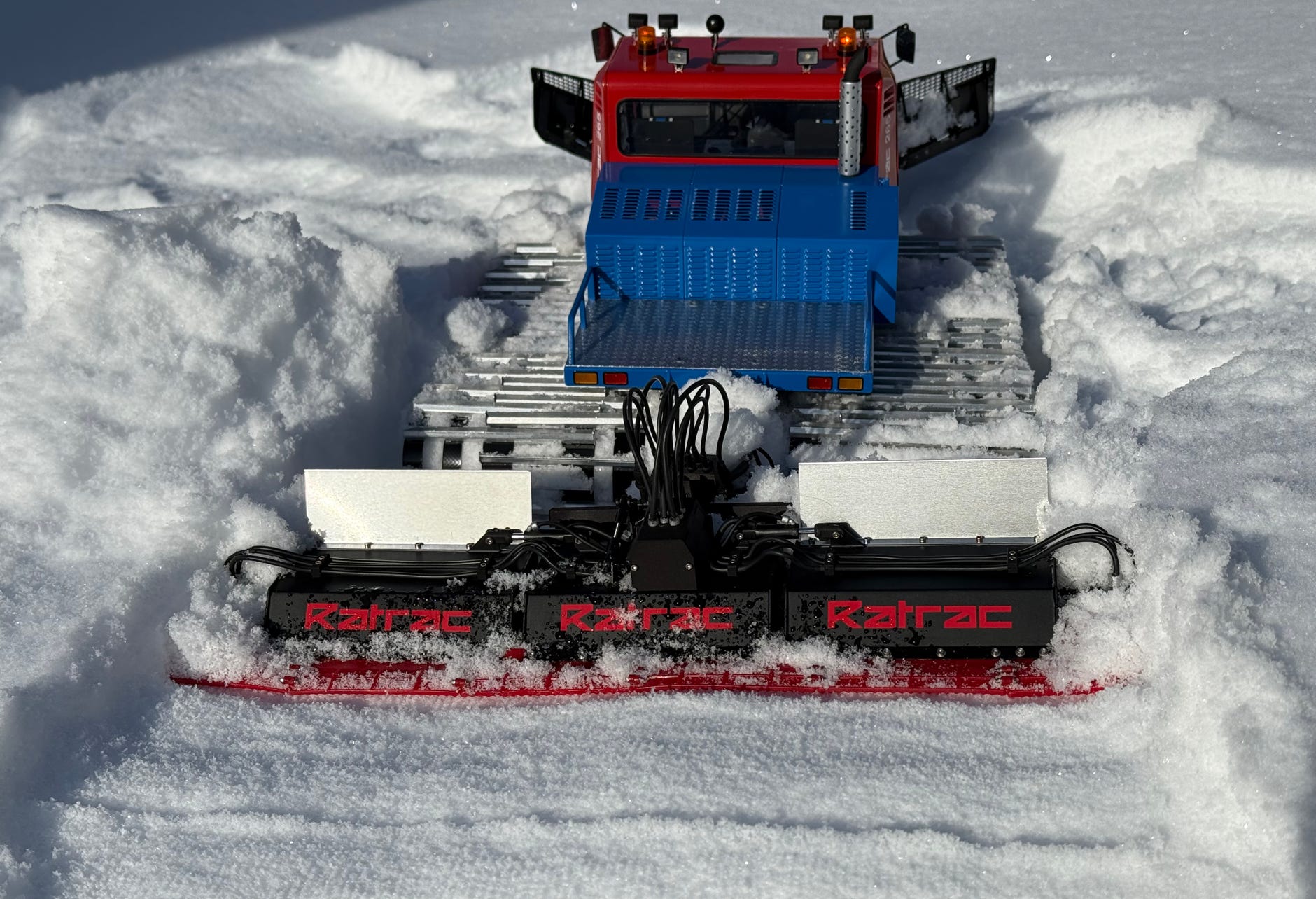
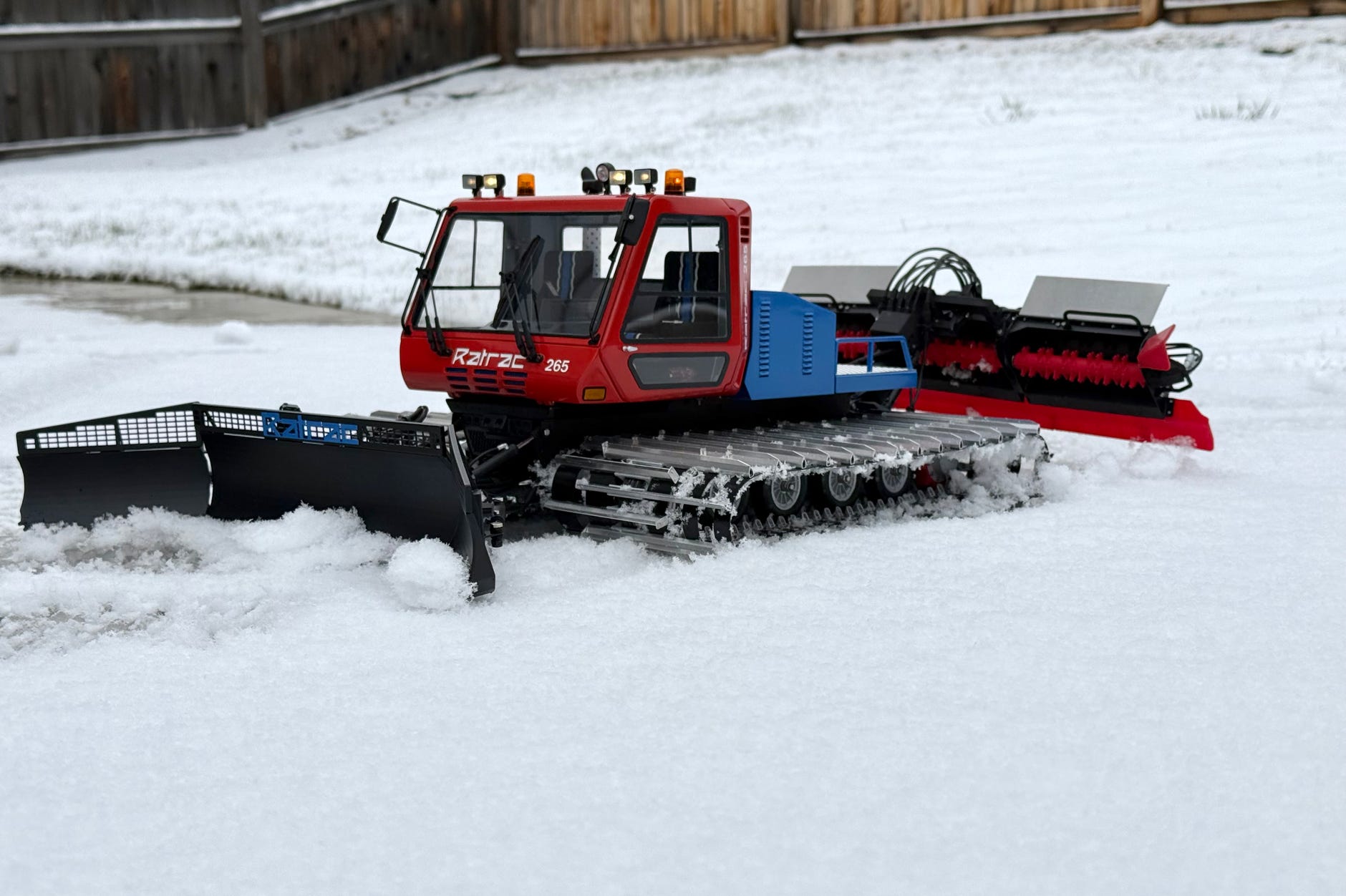
General:
- Scale: 1:12
- All parts were custom-built by the three Swiss model-making colleagues (see introduction).
- Propulsion: Maxon motors with gear box with Pistenking flex shafts
- Gross weight: xx kg (including the battery)
RC Functions:
- Speed
- Steering
- Windshield wipers
- Blade raise / lower (mechanically)
- Blade roll (mechanically)
- Blade swivel (mechanically)
- Tiller raise / lower (mechanically)
- Tiller boxes raise (mechanically)
- Tiller wheel speed adjustable
- Light functions by Kingbus
Elektronic Components:
- Radio controller ScaleArt Commander SA-1000 with CM-5000 Receiver
- Double speed controller Pistenking
- Power supply to the tiller shaft drive directly via CM-5000 speed controller
- Battery Turnigy nano-tech LiFePo 4S, 13,2 V, 2100mAh
- Pistenking Kingbus modules for the lights

Diese Seite verwendet Cookies. Sie stimmen der Verwendung von Cookies durch Anklicken von “OK” zu. Nähere Informationen finden Sie in unseren Datenschutzbestimmungen.
This page is using Cookies. You are permitting the use of cookies by clicking on “OK”. More information can be found at our Privacy Protection.


